Showing posts with label writer. Show all posts

Saturday, 6 August 2016

August Garden


That beautiful blue star is a borage flower. I wanted a borage because bees love them, and my mother grew them. They self-seeded everywhere and the garden was blue and starry for years.


What I didn't remember is how big and savage they are. Over four feet tall, bushy and covered all over by fine, sharp hairs that stab you almost as viciously as the thistle.
      There are gentler things in the garden.


      The thistle is as ferocious and unapproachable as ever.


      Unless you're a bee.


I think this is called 'getting stuck in.' 

Mallow


Woodie making himself comfortable by the pond. He nibbled seed from the grass-head in front of him, took a drink, nibbled a bit more seed, another drink...


Hoping for a few more days of sunshine...

Saturday, 21 February 2015

A Night Out With The Stars...

Well, the stars of my world...
The Royal Literary Fund


The Royal Literary Fund has recently started a new venture. There are now two RLF centres, where events of various kinds are hosted, one in Bristol, and one in Birmingham.

There are two kinds of event. In the evening are the public events, where writing members of the RLF give readings, or take part in a panel discussion. The writers who make up the audience are welcome to bring along guests.

The other kind, held during the afternoon, are training days, where one or more writers pass on tips, tricks and wrinkles to other.The aim is to build a supportive community among writers - which already seems to be happening.

The Birmingham Midland Institure
So on Thursday last I went along to the first Birmingham one, held at the Birmingham Midland Institute in Margaret Street. It's a beautiful old Victorian building - in fact, my guest, my pubowrimo friend, came along as much for the chance to get inside this building, which he had often passed and wondered about, as for anything else.

Considering it was a cold, dark, wet, windy February evening, and that many people in the audience had travelled considerable distances, it was well attended. As one guest put it, 'I would crawl over broken glass if the RLF asked me to.' The RLF is a remarkable institution, which does inspire great affection and loyalty in its writers - but there was also a buzz of curiosity about this new scheme, and a feeling of priviledge at being in at the start.
 
The subject for the evening was 'Creating A Sense of Place.'
The three writers taking part were Jane Adams, Kerry Young and Helena Attlee.

 
I know Jane Adams a little, because when I started as an RLF Fellow at De Montfort University, I took over from her - and she was extremely kind, in leaving me sheets of very helpful notes on the ins and outs of the university. I hope that she'll visit this blog soon, to tell us about the miniature knights she and her husband have been working on.

The Greenway by Jane Adams
Jane read from her first novel - which obviously still means a lot to her. Called The Greenway, it's set in a place Jane remembered from her childhood, a place - The Greenway - which she found eerie and disturbing. She spoke of how much of our most vivid impressions are rooted in childhood memory.

Kerry Young was born in Jamaica, of Chinese descent, and she was eager for us to experience Jamaica through her words - determined that we should. She read extracts from two of her books, Pau and Gloria.  The first, to give us the tumultuous noise and smell of the city, Kingston. The second, from Gloria, was to give us the heat and stillness and harshness of life in the country, among the banana and cane plantations. She succeeded in her aim!
Pau by Kerry Young


Helena Attlee is best known for writing about gardens and has travelled widely, particuarly in Italy. Her favourite method of capturing a sense of place is simply to travel with a notebook and pen, and to write down her impressions on the spot. These notebooks - rather like the sketch-pads of a painter - are an invaluable resource once she's back at her desk. They are full of details and impressions which had faded from her mind, but are captured, written down in her own words.


The Land Where Lemons Grow by Helena Atlee
She made me want to take a notebook to some far-flung spot on the instant.

Instead, I joined the others in scoffing the sandwiches so thoughtfully provided by the RLF - and by Meg Sanders, the regional organiser. Also wine, red and white, and tiny delicious cakes. The RLF knows how to appeal to writers.

The next public RLF event is a poetry reading - I'm looking forward to it. I'm also booked in to deliver some events myself - to take part in a short-story reading, and a panel on research - and to present a training day on ebooks.

I'm hoping there'll be some more of those little eclairs...

Saturday, 24 January 2015

Winter Scene - and Pubowrimo 2

Joan Lennon, author and poet, often gives us beautiful photos - she's given us some this year of the snows in Scotland.

So I'm answering with winter scenes from the Clent Hills, near Birmingham - and invite you along on the walk my friend and I took.

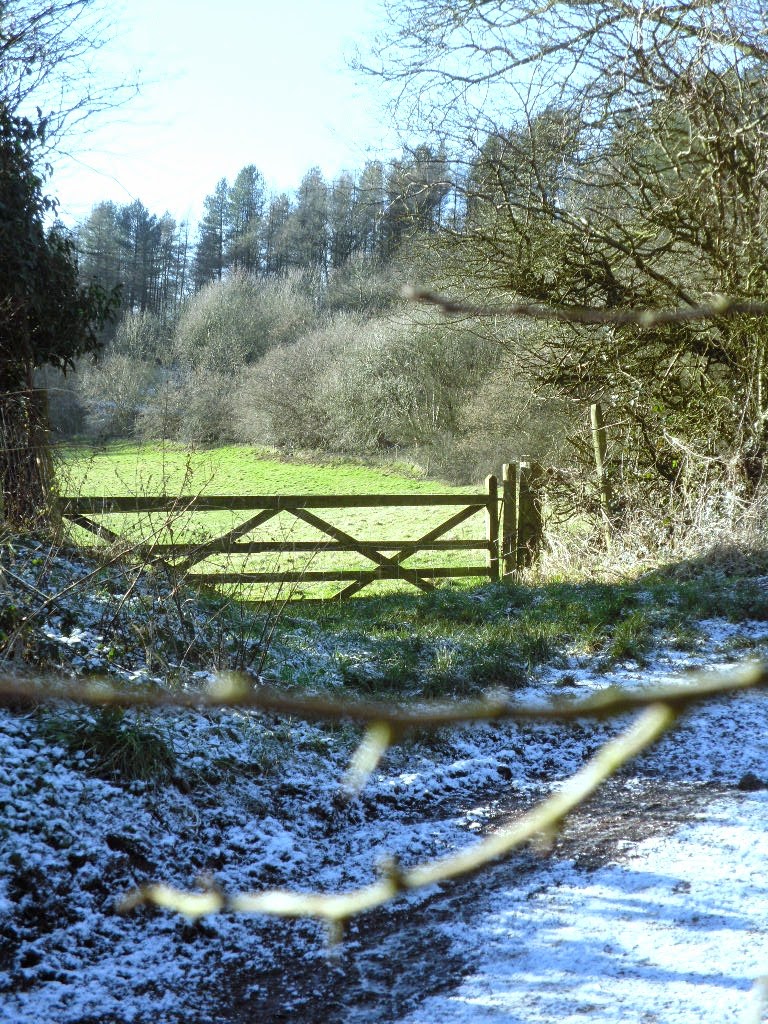
Icy ruts and puddles at the bottom of the hill.


There wasn't a lot of snow, in fact. Much of it was thick frost. But it was proper cold. Colour us blue.

Near the start of  the climb.

Climbing up - cold but sunny.


The top of the hill - blue sky and snow


On top of Clent Hill there is an entirely fake stone circle. It's made of concrete. Despite that, it can look quite dramatic.


Oooh, but it was taters up there, in the teeth of the wind. We started thinking fondly of the pub.
On the way back down, a favourite old tree.
Back at the car we spotted this character on the mooch. He hung about, posing hopefully for quite a while, but unfortunately, we hadn't any mealworms, or even bread, about our persons. Perhaps next time.

 With cold fingers, toes, ears and noses, we went off to the pub for another pubowrimo. Soft leather sofas, cider, and scribbling on scrap paper or in notebooks. Again, it worked. The friend wrote over 700 words - not as many as last week, he says, because he crossed out a lot. He's still very happy with what he did write, as it's all good, solid progression - and without pubowrimo he probably wouldn't have written it at all.

I'd made a couple of previous attempts at writing my piece at home. It's a part where one character - first person narration - realises that another character is not the nice, ordinary person she took her to be, but, in fact, a malevolent danger to her family - and who has caused most of the trouble they've experienced recently.

The problem was making it convincing that the POV character would come to this conclusion - without making the character herself appear deluded - and keeping the reader engaged while the reasons for the conclusion are spelled out.

I hadn't made much progress at home. I kept thinking, not enough reason! - Boring! In preparation for pubawrimo, I went back through my file and made a list of all the clues that, taken together, might reasonably set alarm bells ringing for my character. I took this list, and the last couple of printed-off pages of my book to the pub with me.

And again, once in the pub with a cider, the words just appeared from whatever strange, subconscious cave they were lurking in. There was some fairly arresting/interesting chat going on at the table near me - "It's by far the best house up there, but it's haunted by the ghost of a child," for instance, said in a completely matter-of-fact way, as if mentioning that the garden was a bit small - but somehow the writing went on despite this, for the full hour.

I managed 2,235 words. I'm not totally happy with it. I think I can improve on it, make it more darkly comic - one of my aims in the book is to make it frightening and funny - but it's something to work with.The words wouldn't be there at all if it wasn't for this exercise.

And my agent is phoning me this week, so useful to have on-going work to talk about.

Saturday, 10 January 2015

I Talk to Karen King...

Recently my friend, the writer Karen King, interviewed me for her blog.

Karen King
 
Karen: What was the first thing you had published?

          Sue: The first book I completed: The Devil’s Piper. I wrote it when I was fifteen, typed it on an ancient iron typewriter, and illustrated it myself, in biro pen.(Not a good idea or a success.)

     One of A M Heath’s agents, Osyth Leeston, took me on — and
The Devil's Piper by Susan Price
sent the book to Phyllis Hunt, who was then children’s editor for Faber — and a wonderful editor. Phyllis said she would publish the book if I could rewrite it to the standard she required. She sent me a ten page letter of comments on why the book didn’t work as well as it could, and how it could be improved.


     Looking back at this from over forty years on, I’m incredulous. I don’t think this would happen today. Publishers in those days took more care of their eco-system — they knew they had to be growing authors up to replace those they were going to lose. And, of course, both Osyth and Phyllis were extraordinarily kind and encouraging to me. Phyllis once said that she thought she had ‘brought me up’ as a writer — and I wouldn’t argue with that. 

     I’ve no doubt there are people just as kind in publishing today, but I don’t think they would have the time or the leeway to help a novice along as I was helped. — Or perhaps I’m completely wrong, and just indulging in a senior moment of ‘things were better in those days?’ If so, please let me know. 

Karen: What do you like writing most? 


          Sue: Something that sells millions, gets turned into a film and makes me rich! 

     It’s a question I find hard to answer seriously. One of the comments made early in my career by my fairy godmothers, Phyllis and Osyth, was that I wrote a lot of different things, and was hard to categorise. I’ve written ‘kitchen-sink’, historicals, full-on fantasy, folkloric retellings, science-fiction, short stories, ghost stories… I’ve written for pretty much every age-group too, from babies to adults. As you can see, on my Amazon page.
 
      And the book I’m working on now is different again: set in the present day, with a truly evil, heartless main character who enjoys tormenting other people and looks on murder as business.
I enjoy writing it all. 

Karen: What piece of writing/work are you most proud of? 

          Sue: The Ghost World Trilogy, certainly. The first one, The Ghost Drum, won the Carnegie Medal. That was a surprise — but as soon as I finished the book, I knew it was the best thing I’d ever written.
          I went on thinking that until I turned all three into e-books (since they’d been allowed to go out of print, and no publisher would reprint them.) This meant scanning them into my computer and re-reading and proofing them all over again. While doing this, I came to the conclusion that the second book, Ghost Song, and the third book, Ghost Dance, were both, in their ways, better than the first.
     The books don’t form a classical trilogy, with each book
Ghost Song by Susan Price
following on from the one before. In fact, Ghost Song is a prequel to Ghost Drum, and is, I think, more lyrical. Then Ghost Dance is a stand-alone book, though set in the same world. It’s much more sinister than the first two, and has a more complicated plot.

I’ve written a fourth book in the series, Ghost Spell, which I may bring out as an ebook one day.
     I recently turned the first two, Drum and Song, into paperbacks, available through Amazon. People who’d read the books when young kept asking me where they could buy paper copies. I’m quite proud that this book is now selling to a second, even third generation!

          You can find the e-books here.
           And the paperback editions here.


      But I’m also quite proud of my Sterkarm books — The Sterkarm Handshake, A Sterkarm Kiss and, soon, I hope, A Sterkarm Embrace. They have probably been the most successful of my books. Recently, I was in a school giving a talk in the library. The talk ended, the class left — but their young teacher doubled back, stuck her head round the door and said, ‘I didn’t realise it was you, but I just want to tell you that when I was 13, Sterkarm Handshake was my favourite book.’
The Sterkarm Handshake by Susan Price
     Maybe this is why:— Mary Hoffman, the Book Maven, awarded my Sterkarm hero the Number 2 spot in her ‘Ten Hottest Teen Heroes.’ 
     Per Sterkarm in The Sterkarm Handshake by Susan Price. It’s pronounced “stark-arm” and is the name of a family of 16th century border bandits. Per is the only and most beloved son, whose pretty face gets him the nickname of “the May” or maid. But he’s a useful man in a battle, a lusty lover and one who inspires devotion in everyone from his father, to his hounds, to the 21st century time-traveller Andrea. 

         The books are a mixture of science-fiction and history, with the 16th Century Sterkarms clashing violently with the 21st Century time-travelling ‘Elves.’
          The Sterkarms are on their third film option at the moment, and I’m just hoping they’ll gallop home with it this time. I’m also hoping that soon I’ll be able to tell people that the first two have been republished, along with the third.

Karen: What’s your favourite poem? 

          Sue: That’s a tough one. Robert Graves said that you know poetry when you read it because it makes your hair stand on end – and the first time I read Shelley's Ozymandias, I certainly felt my hair rise. I love Marvell’s To His Coy Mistress too — possibly the greatest knicker-dropper of all time!
     Despite being an atheist, I love U A Fanthorpe’s religious poems, particularly Joseph. And I’ve loved the old Border Ballads since I was a teenager — all human passion and crime is there: every kind of ‘cide — patri, matri, infanti, fratri. Some wonderful phrases too, as when Edward’s mother asks him what — since he’s determined to ‘set his foot in a bottomless boat’ — does he leave to her? He answers: The World’s room/ To beg your bread/ For all the lies you told to me.’ 

Karen: What do you like to do to relax? 

          Sue: Read! — And watch telly. And walk over the hills. I like shooting with my longbow — though only at targets! My partner and I love island-hopping by Cally-Mac ferries. Earlier this year we got up at 3am and drove madly north for 8 hours to catch the noon CallyMac from Oban to Barra in the Outer Hebrides. We’re planning to go to Barra again, but this time make our way up the Hebrides, via ferry and causeway. My partner’s an ex-Met-Office weather observer, and very good at avoiding the worst weather. 

Karen: That must come in handy! - What do you like to read? 


          Sue: All sorts. I loved the Game of Thrones series. I only meant to pass the time by looking into the Amazon sample of A Song Of Ice and Fire, but was hooked and read all seven without a break. Then watched the TV version (very good, but the books were better.)
I love Minette Walters and Sarah Waters. I love legends and mythology. I was stunned by Mantel’s books about Cromwell – so good - and I read and re-read Terry Pratchett all the time. 

          Thanks for talking, Karen!
           Karen's website and blog, where she talks to many other writers, can be found here.
          You can read about her activities as Patron of Reading to Edward Oldcorn College in Worcester, all about her books. She offers teaching in Creative Writing too.

Saturday, 19 January 2013

A Peek Into My Work Room

          I've been working on the third book in the Sterkarm series, after The Sterkarm Handshake and A Sterkarm Kiss. In fact, I've been working on it for the past three years, amongst other things.
          Most of that work has been done on my laptop, in the corner of my sofa - partly because that suited me and partly because what I call 'my office' upstairs was in such a mess I could hardly get in the door.
          Housework has never been a priority for me - and then when both my parents were ill a few years ago, a lot of other things fell by the wayside. And since they died, a lot of things haven't seemed worth bothering about. The 'office' became a place to stuff oddments into and close the door.
          But the work on Sterkarm 3 is becoming increasingly serious. I felt the need of somewhere I could go that was away from my usual sofa-corner, a new place that would send my brain the signal, 'Time to work.'
          Like many other writers, I've often found it productive to get out of the house altogether, and go and work in a library, pub or cafe. I spent a lot of time trying to think of somewhere. The library was out, because personally, I find the grim silence in libraries distracting! I prefer somewhere with a bit of talk and coming and going. But the trouble with pubs and cafes is that you have to keep buying food and drink as 'rent'. This is perfectly reasonable - if I was trying to make a living from running a cafe, I wouldn't want the place full of free-loading writers either. But reasonable as it is, I still can't afford it.
          So I decided to clear my office of junk, generally tidy up, and see if it could serve as my change of scene. For the past week it's been working well. And I thought I should commemorate the tidy office, because it probably won't stay that way for very long.

           It may not seem remarkable to you, but those friends and relatives who have been allowed into the place over the past few years will be staggering with shock at this photo. There are places where you can put things down!
          I was too ashamed to publish a 'before' shot, but just imagine the desk and chair piled with archaelogical layers of papers, cds, books... And the floor littered with the pages of books ripped apart to make e-books.
          I had a lot of photos, cards and such that I wanted to display: and decided to tack them to the back wall instead of having them cluttering shelves and falling off in drifts.

           That male nude in the centre is a birthday card sent to me by my Mom and Dad. Obviously, that's the only reason it's up there - for sentimental reasons. Alongside it is the crashing racing-car card sent to me by my brother when I was learning to drive: 'Mirror - signal - manouvre - Oh !&%?!!' It still makes me laugh.
           Here's my own ghost-drum on its shelf, with its antler hammer, so I can summon the spirits - or Blott - when I need them.


          Here's a corner of one bookshelf -


          But now I have to get back to work, so I will hand you over to Blott...

          Weather Report: Friday 18th. Here, on top of the Black Country Plateau, it has been snowing gently but persistently all day. Kerbs have vanished, steps have become slopes, and my car is one big white mound. Don't think I'll be seeing anyone this weekend. Plenty of time to work!


Saturday, 16 June 2012

Defending The Villain


          I’ve been reading reviews of my book, The Sterkarm Handshake on Goodreads.  Most of them are good – four and five star.  People say how much they enjoyed the book, and I heartily thank people for taking the time and trouble to post a review – even though they may have done it for fellow readers rather than me.
          However, I was struck by how many of the reviews – even the positive ones – took issue with the character of my villain, the Company Executive Officer, James Windsor.
          He’s called a ‘one-dimensional character’ and ‘a pantomime villain’.  He even, commenters say, in shocked tones, makes fun of the heroine’s size.
          This puzzles me.  Early reviews of the book said much the same thing; and here are later readers saying it.  Could I have got it so wrong?
          I don't think I did.
          Now I’m fully aware that any writer arguing against adverse comments is going to look like an egoist who can’t take criticism.
          But I’m going to do it anyway.  I’ve been publishing since I was 16.  I’ve been taking criticism, constructive and destructive, on the chin for the whole of my adult life.
          I don’t quarrel with those who say that the book is too violent, or that the heroine is irritating, or even that it’s boring.  I’ve said the same things of books by other writers, even of books by writers whose other works I’ve loved, so I’m neither surprised nor dismayed that some people dislike some of my books.  I had my reasons for writing it the way I did; but other people would have made different choices, and dislike those I made. Fair enough.
         The comments on James Windsor puzzle me, though.  When I write, I obviously create scenes, plots and characters that seem, to me, convincing – since if they don’t convince me, it’s foolish to hope they’ll convince readers.  I characterised Windsor as I did because it’s my observation that there are people like him abroad in this unhappy world.  Not everyone, not even every CEO – but some.
          I’m quite glad to think that so many of my readers seem never to have met a James Windsor, but I’m puzzled too.  They’ve never met a bully?  Really?
          And yet bullying at work is commonplace.  (Nor is it new: I was talking about this with my aunt, and she told me that she left her first job, 64 years ago, because her boss bullied her so much.)
          James Windsor has financial power, and power over employees, and he enjoys using it.  He gets a kick when people have no choice but to obey him.  It makes him feel better about himself – why wouldn’t it?  It proves his success as much as his car, his home, his expensive suits.
          That he’s one-dimensional may be true to the extent that, in the books, we see him only with subordinates – or people he thinks should be his subordinates, such as the Sterkarms.  (But he has no hold over the Sterkarms, and they don’t give a spit for him.)
          I also think it’s fair to say that Windsor is good at his job, intelligent, witty and, quite often, right.  He makes the mistake made by many ‘civilised’ men before him, of underestimating the ‘uncivilised’, but he’s far from stupid.  He’s just not benevolent.  Take a look round the world and you’ll see plenty of intelligent but malevolent people.
          With his equals or superiors Windsor would be charming – well-mannered, witty, friendly, considerate.  With equals, he has a reputation to sustain, and from superiors he has something to gain.  I’m told that my great-grandfather was like this.  Among workmates and pub-friends, towards strangers and such superiors as policemen and bosses, he was ‘a great laugh’: generous, witty, charming.
          At home, he made no effort to charm. He terrorised his wife and children, kicking one of his sons senseless for defending a sister, and deafening a daughter by hitting her on the ear with a seven-pound lump hammer.  (He was a blacksmith, and ordered his daughter to hold a chisel while he hit it with said hammer.  She annoyed him by flinching, and he hit her with what he had to hand – the hammer.)  But that night, in the pub, he was ‘a great laugh’.  Does this seem OTT, too melodramatic? - But it's true, and very similar scenes are being enacted on the day you read this, somewhere near you.
          A friend in publishing once told me of a writer she was friendly with.  She’d known him for years and they’d always got on well when they met at launches and lunches.  Then, due to the last recession but one, my friend was given notice.  Shortly after, she met the writer again.  They hugged and kissed, and he asked for her news.
          She said she’d lost her job, and felt rather depressed, since she couldn’t imagine finding another, given her age and the state of the industry.
          The writer replied, “Oh, you’re no use to me any more, then, are you?” – turned his back and walked away, leaving her gobsmacked and speechless.
          Very James Windsor. He, the writer, and my great-grandfather were narcissists.  They aren't in short supply, and they aren't always serial-killers.  I think they're quite often in positions of authority, both because they want to be, and because their unswerving self-interest helps them to get there.
          As for Windsor’s insulting remarks to my hefty heroine – have my readers really not met people like this?  Really?
          While writing Handshake, I met a woman who worked for an executive, and asked her about her job and boss.  She told me, rolling her eyes, that he always addressed her as ‘Gorgeous,’ even calling her this in front of others.
Now, this would be patronising and offensive enough, but it went further.  My informant, though professionally impressive and very well groomed, was fully aware that not many would seriously call her ‘gorgeous’.  Hence the rolling eyes.  Every time he called her that, especially in front of others, it was a put-down.
          But how could she complain?  She had a well paid job which otherwise suited her well, which she might lose if she complained.  Even if you don’t mind losing your job, how can you complain that your boss calls you ‘gorgeous’?  But she and everyone who heard it knew that it was a sneer.
          Why did her boss sneer at her on a daily basis?  Because he could.  He enjoyed it.
          It was this meeting which nerved me to have Windsor speak to Andrea as he does.  At one point he gives her expensive chocolates saying, “I’m sure you’ll know what to do with them.”
          Andrea reflects that Windsor’s gifts are payment for the right to insult people.  This is the politics of gift-giving.  At its most benign, it’s an affirmation of friendship – at its less benign, it’s manipulative power-play.  It’s hard to quarrel with someone who gives you expensive gifts – and some use that to get away with bad behaviour.
          It’s these experiences, and my own, which lie behind James Windsor.  I don’t think, unfortunately, that he’s unrealistic or pantomimic at all.
          But I’d be interested to hear your thoughts.  I will take them on the chin.

Saturday, 10 March 2012

I Want To Write!


          On Saturday, the floor of my bedroom collapsed and tipped me and the bed sidelong – I saw the mattress rising up above me, pointing at the ceiling, as I slid down into the hole.
          I’d been lying peacefully in bed, awake, but eyes closed, planning my day.  I opened my eyes to begin it – and the world turned upside down.
          I clutched wildly at the mattress as the bed reversed and tipped up the other way.  Then it whirled in circles like a carousel before wallowing sickeningly, like a small boat in a rough sea, leaving me sicker than I’ve ever felt when on a boat.
          By this time I’d realised that the bed wasn’t actually moving.  I was enjoying my first experience of vertigo.
          The fun continued when I sat up.  The whole room folded into origami and flipped and flopped about until I didn’t know which way was Norwich, and fell over on the bed like a rag doll.
          My renegade left ear had upped its game again.
          My right ear you’d like.  It’s a modest, respectable ear that does all that’s required of it without feeling the need to draw attention to itself.  In the whole of my life I doubt I’ve spent as much as an hour thinking of my right ear, or even being aware of it.  Qualities I appreciate in an ear.
          I feel now that I haven’t appreciated it enough – have even mistreated it by having holes punched through it and inserting metalware.
          But not for my left ear a life of blameless obscurity.  It wasn’t going to settle for being ignored while hands and feet, and mouth and hair – useless hair! – got all the attention.  So, about twenty years ago, it turned on me.
          At first, it was merely irritating.  It would feel as if someone was pressing their thumb against the outside of the ear.  For hours.  Annoying, but easily ignored.
          So the ear upped the ante.  Imagine a tiny balloon being blown up inside your ear-canal, so it pressed lightly on all sides.  Not painful, but a bit more than annoying.  It would make me shake my head and rub at my ear, as if whatever it was could be dislodged.
          Imagine that balloon being steadily inflated, so the pressure grow and grows.  At some point it passes beyond annoying and becomes painful. And then more painful, and more. The ear wins.  It has my complete attention.  It’s impossible to think about anything else.
          Still it plays games.  Years go by without the slightest trouble.  More years pass without it ever going beyond the ‘annoying.’  Still, the slightest grumble from it has me instantly on edge because it can accelerate faster than a Ferrari, from tiny grumble to howling at the moon in minutes.  It can then continue for a fortnight, or stop after five minutes.  I never know which.  And now I’m always going to be waiting for the world to start spinning as well.
         So there’s been no work done on the Sterkarms this week.  Not much done at all.  It’s very frustrating, because I don’t feel too bad until I try to do something – when I rapidly become sick and dizzy and have to give up.  ‘So you’re forced to lie on the sofa and watch old films,’ said my brother unsympathetically.  And I have.
          But I want to write!